

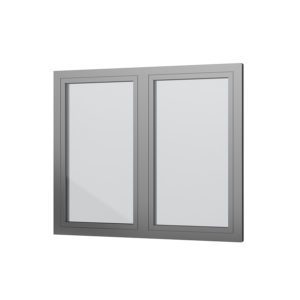
Aluminum or PVC windows?
It is lightweight, corrosion-resistant and non-magnetic metal. That is why it is used in many different industries, such as automotive, packaging and ... doors and windows. The key chemical compound used in the production of aluminum is aluminum oxide,
Alumina is the most abundant metallic chemical in the earth's crust. It accounts for 8% of the soil and rock of our planet. The ore with the highest concentration of alumina is bauxite. It is found in tropical and subtropical regions. How is bauxite mined? It takes place in opencast mines, where it is obtained from the surface layers of the earth.
Aluminum production is carried out using two processes:
- Chemical: Bauxite ore is granulated and purified to obtain alumina.
- Electrolytic: Alumina is melted to release pure aluminum. Liquid aluminum is cast into ingot molds.
In this way, we obtain "natural aluminum".
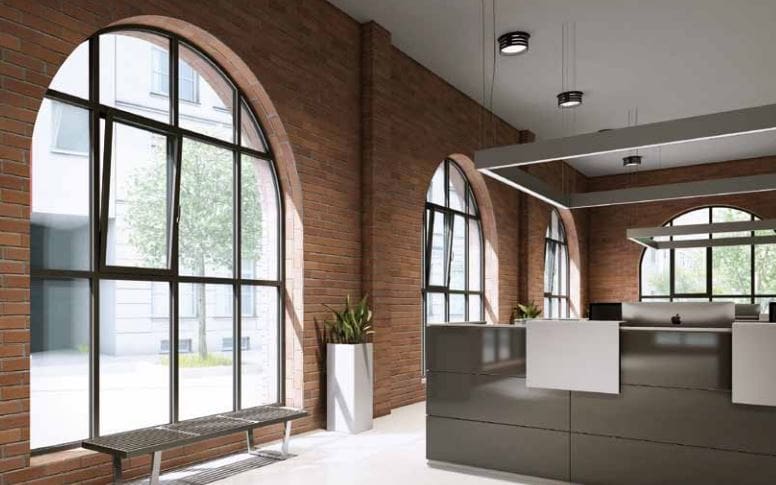
The main advantages of products made of aluminum are durability and lightness. As a result, windows or doors made of it are much less susceptible to damage compared to PVC and wood structures, and they do not change their size due to temperature changes, which is very important both during installation and operation over many years. The plasticity and formability of aluminum mean that it can be used to form windows of various sizes and shapes, e.g. trapezoidal or circular. The same property affects the fact that the window profiles can be very narrow, and thus, it determines the aesthetic appearance of the windows, which therefore appear slender and have a larger glazing area. Additionally, narrow profiles optically enlarge even small windows. It is also worth adding that aluminum frames can also be wider and allow the installation of exceptionally large, heavy glazing with various properties. Properly selected fittings make it possible to create anti-burglary or fire-resistant structures with a high class of fire resistance.
Windows and doors are also protected against corrosion by anodizing or powder coating. In the second case, we can choose any color of profile finishing. Aluminum windows are also a good warm insulator, as their construction uses the most modern thermal insulation materials. They also do not cause any problems in care, do not require maintenance, and in addition, the metal elements are almost 100% recyclable.
Summarizing the features of aluminum products:
- they are light compared to other materials
- have a very good strength-to-weight ratio
- are corrosion resistant
- they are diamagnets
- they are not toxic
- conduct heat (windows and doors use appropriate thermal breaks to reduce heat conduction)
- are durable
These properties can be further improved. For extrusion for the production of windows and doors, such an aluminum alloy is mainly used, containing as additional elements mainly magnesium and silicon (Mg and Si), which improve strength and corrosion resistance.
a section made of polyvinyl chloride, the main chamber of which is reinforced with steel to increase the strength of the structure. What is polyvinyl chloride really? Synthetic polymer from the group of vinyl polymers, obtained by polymerization of vinyl chloride. Used in the manufacture of plastics. It has thermoplastic properties, is characterized by high mechanical strength and is resistant to many solvents.
Undoubtedly, plastic windows have many advantages. The main one is primarily energy efficiency. Today, PVC windows are products with a really favorable heat transfer coefficient. The lower the window, the tighter it is, so it keeps the house warm, which in turn leads to lower heating bills. This is important news for thrifty users.
However, energy efficiency is not everything. Plastic windows are also durable, have good acoustic insulation and are resistant to moisture. The high aesthetics is also distinguishing plastic windows. You can choose frames in various colors, not only in classic white. In addition, plastic windows can effectively imitate wooden windows, and even aluminum covers can be used in them.
Another advantage of plastic windows is, of course, their low price. They are the cheapest windows when you compare them with wooden and aluminum windows. Therefore, not only can you save on the fact that the window is tight and pay lower heating bills, but you can also benefit from the mere purchase of plastic window joinery. An undoubted advantage of plastic windows is also the fact that they do not require special care, e.g. the kind that wooden windows need to maintain their appearance and properties.
Aluminum windows
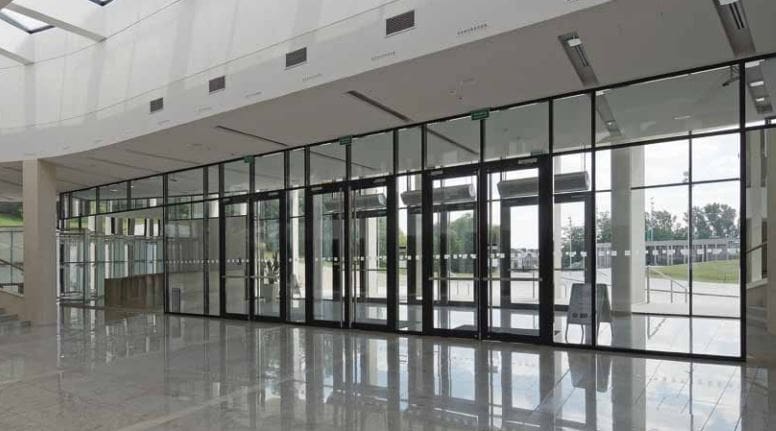
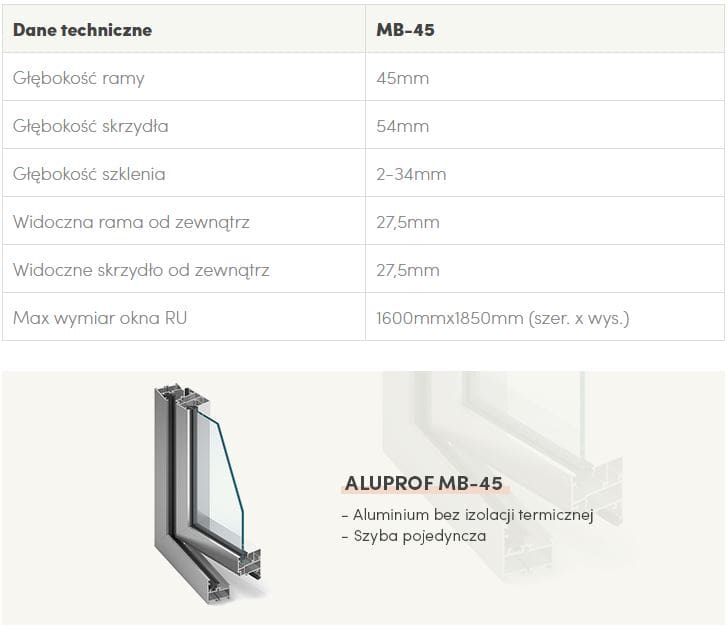
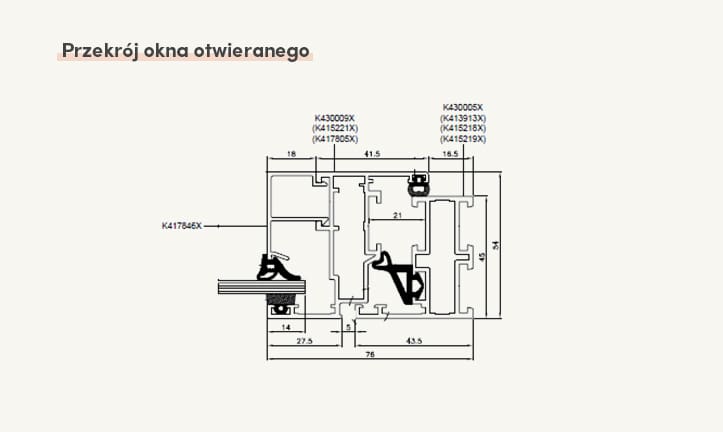
MB-45 aluminum windows
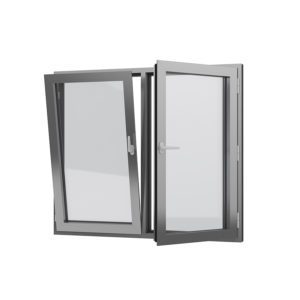
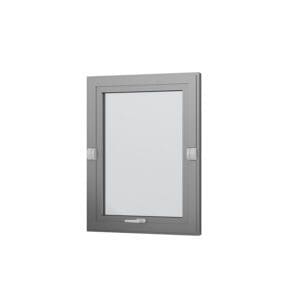
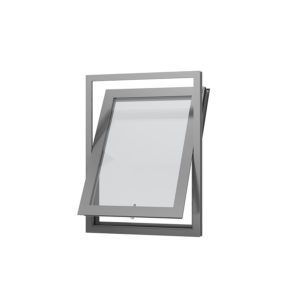
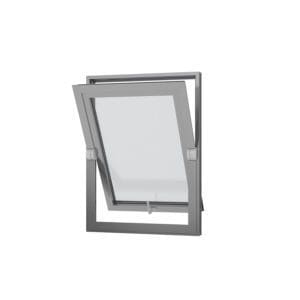
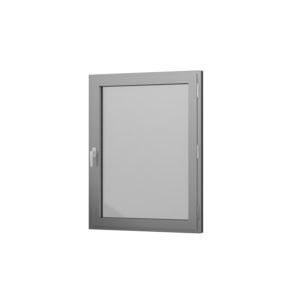
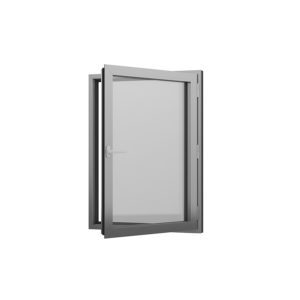
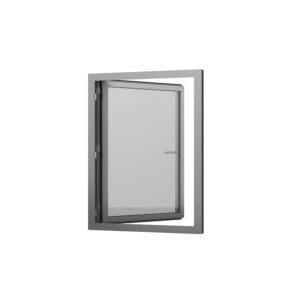
MB-59S Casement aluminum windows
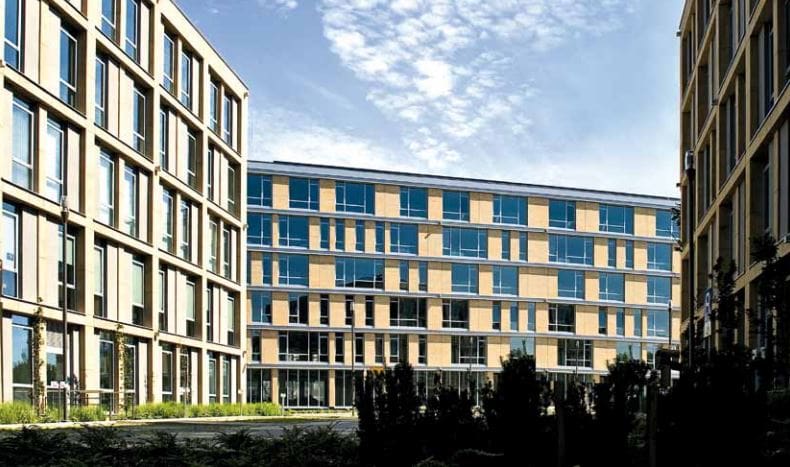
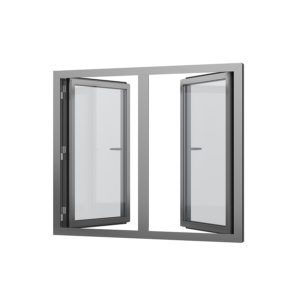
The MB-59S Casement is intended for the production of windows hinged and side-hung, opening outwards, with thermal and acoustic insulation. Windows from this system are designed to be built into openings in a wall and also to be mounted in a mullion and transom façade.
Depending on the thermal requirements of the building, the MB-59S Casement HI version of this system with improved thermal insulation can be used. Special inserts are placed in the central chamber of the aluminum profiles. Outward opening windows can be equipped with rotary or scissor hinges. The MB-59S Casement system allows the use of glazing up to 40,5mm in window sashes, and up to 31,5mm in spacers. This system is aesthetic, the internal surfaces of the frame and the sash lie in one plane, the glazing gaskets are hardly visible from the outside, and an effective drainage system is used.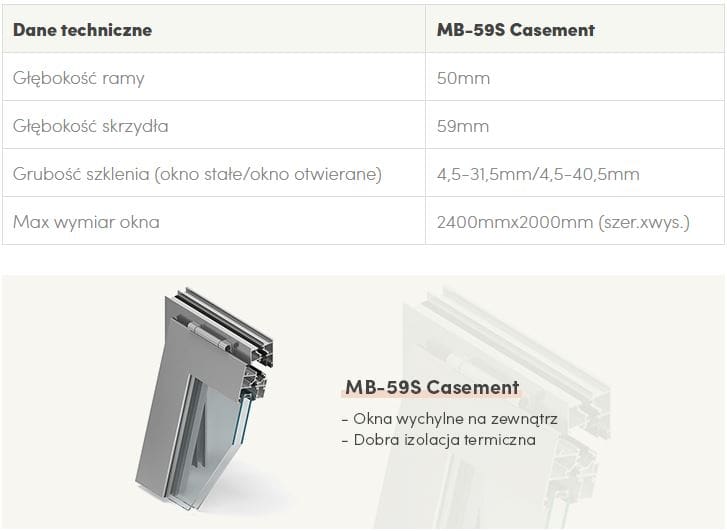
MB-60 aluminum windows
MB-70 aluminum windows
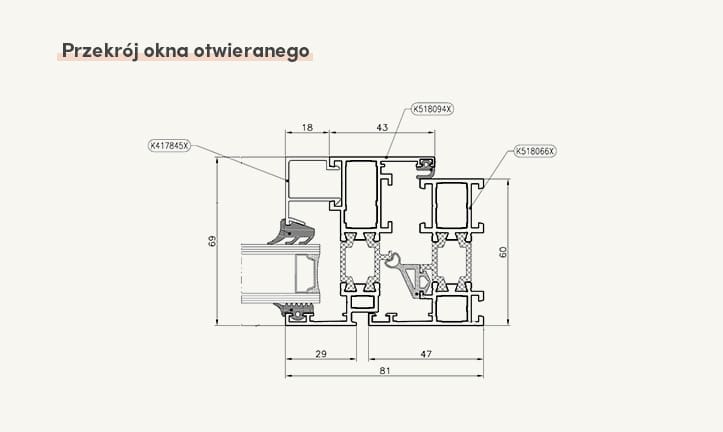
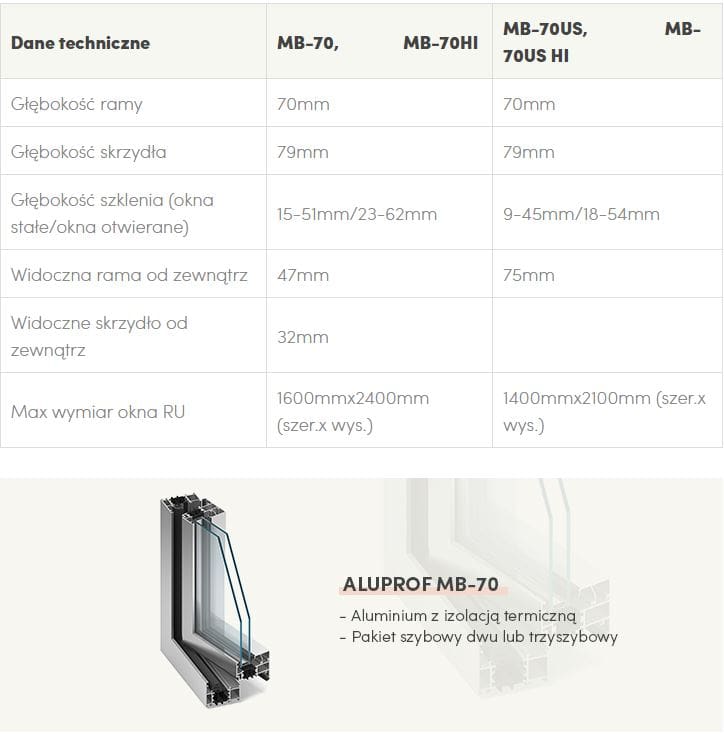
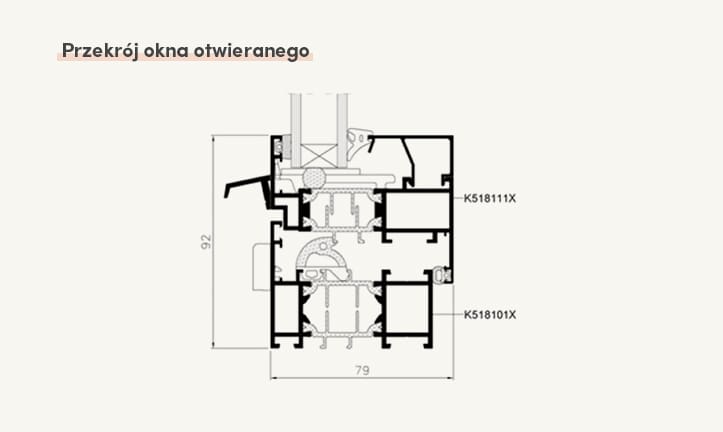
MB-70 is a modern aluminum system that is used to make demanding structures with thermal and acoustic insulation. The profiles have a three-chamber structure. We use them to create windows, doors, vestibules, showcases, and spatial structures. The sash and frame, after closing the window, create the effect of one plane from the outside. The shape of the profiles allows for a slim and durable structure. In this system, we are able to obtain a low value of the heat transfer coefficient. Depending on what profiles we use and accessories, we get U from 1,5 to 2,39 W / m2K. The thermal breaks used in this system are omega-shaped, 34mm wide. They are made of glass-fiber reinforced polyamide. These washers strengthen the profile and facilitate drainage of sections, which ensures proper thermal insulation of the window in all weather conditions.
The MB-70 system is the basis for the better MB-70HI, MB-70US HI solutions, for such U windows it can be 1,0 to 2,3 W / m2K. thermal insulation is increased by adding insulation inserts in the central chamber of the profiles. MB-70HI windows can be installed in individual development as well as in aluminum facades. Windows made in the MB-70US (Hidden Sash) system have sashes that are invisible from the outside of the joinery.
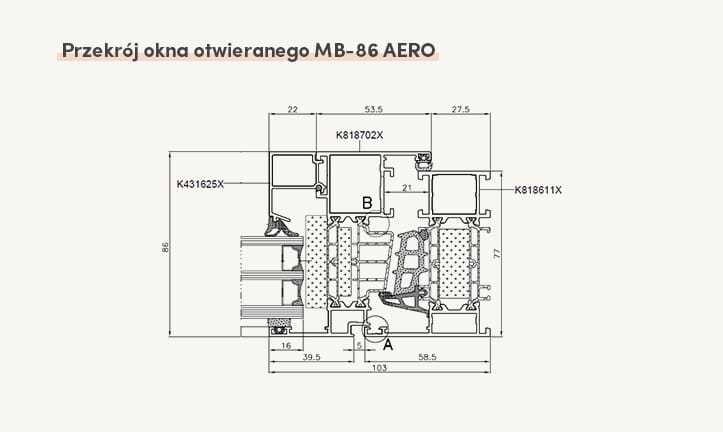
MB-86 aluminum windows
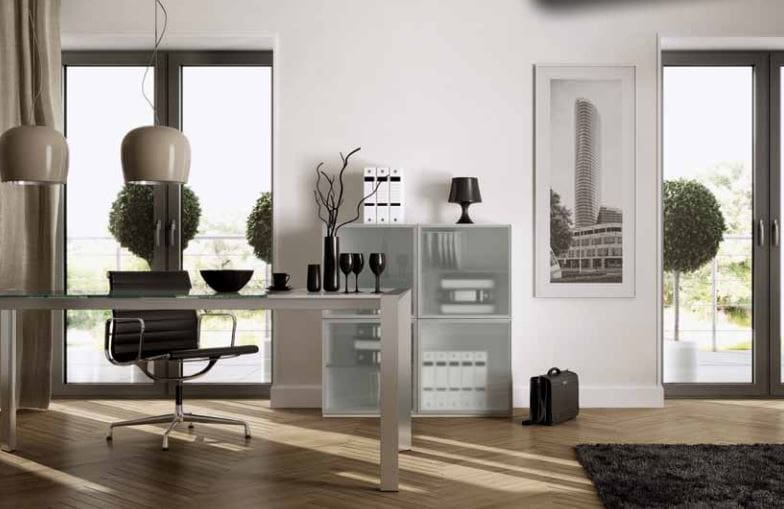
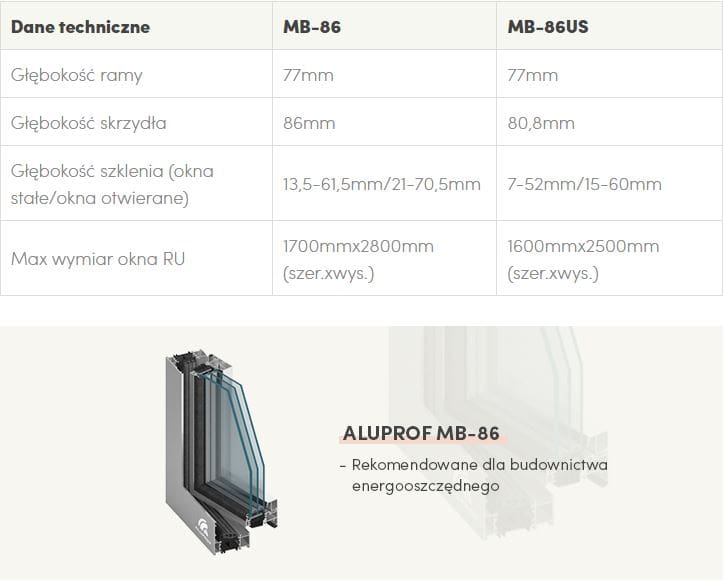
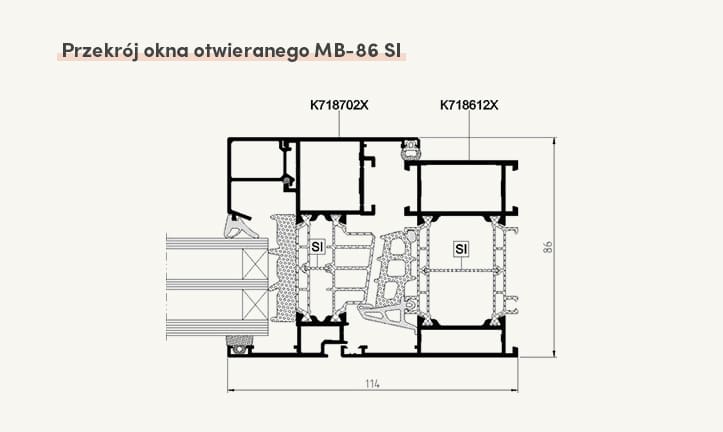
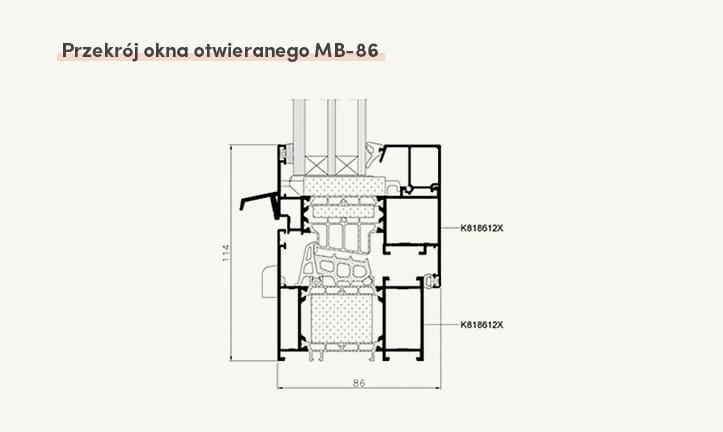
MB-86 is a window and door system with very good parameters, giving the possibility to meet the various needs of users. The structure of its sections has 2 variants depending on the requirements of thermal energy saving: ST, SI. MB-86 is the world's first aluminum window system to use airgel - a material with excellent thermal insulation. The advantages of the MB-86 system also include the high strength of the profiles, enabling the production of large and heavy windows.
Features that affect the functionality and aesthetics of windows made in the MB-86 system:
- New shape wide thermal breaks
- A wide range of sections guarantees the required aesthetics and strength of the structure
- Glazing strips with additional sealing
- Profile shapes adapted to the assembly of various types of envelope fittings, including hidden hinges
- A wide range of glazing allows the use of all types of glass, including two-chamber, acoustic or anti-burglary
- Profile drainage available in two variants: traditional or hidden
Windows on MB-86 profiles, depending on the profiles used, and accessories obtain very good thermal parameters MB-86 ST from 1,39W / m2K, MB-86 SI from 0,92W / m2K, MB-86 AERO from 0,57W / m2K .
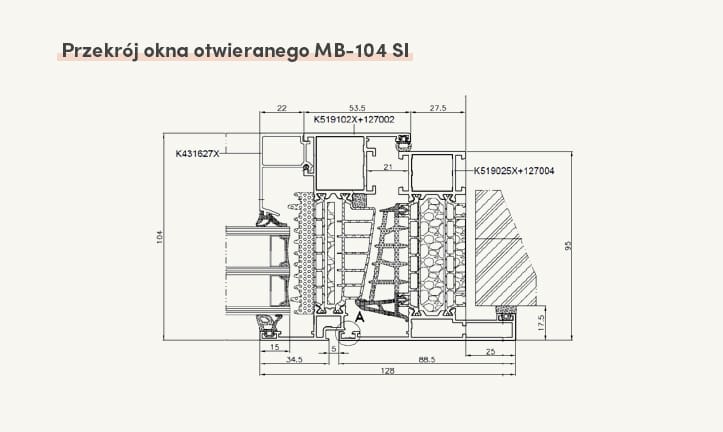
Aluminum windows MB-104 Passive
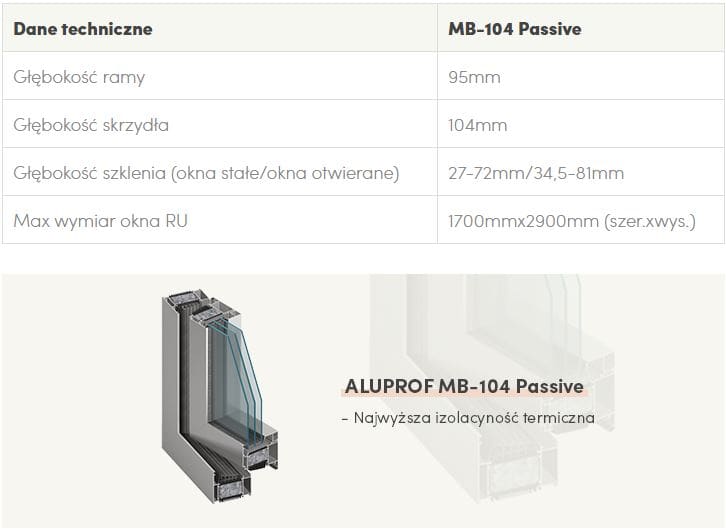
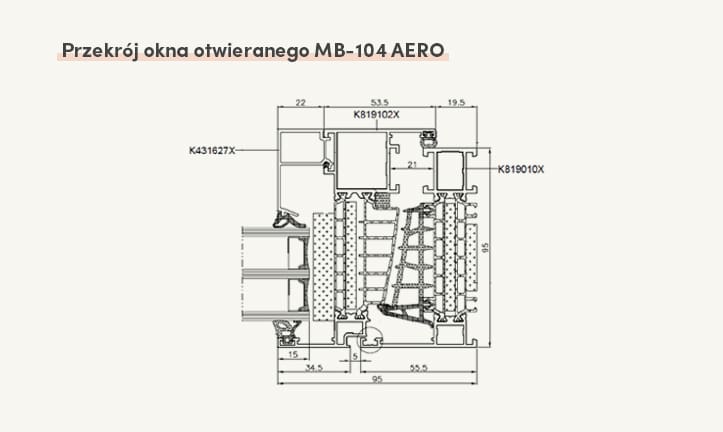
MB-104 Passive is a system with a thermal break o the highest thermal insulationmeets all the requirements of passive construction. The MB-104 Passive system is used for external development, e.g. windows, vestibules, display windows and spatial structures. This system is characterized by high thermal and acoustic insulation, water and air tightness, and high structural strength. The MB-104 Passive system has two variants of the SI and AERO execution, depending on the requirements of thermal energy savings. This system is dedicated to energy-saving and passive construction.
Advantages of the MB-104 Passive system
- Windows with Passive House Institute Darmstadt certificates for the MB-104 Passive SI and MB-104 Passive Aero versions
- High thermal insulation for the U-opening windoww from 0,53 W / m2K and for the U doorD from 0,62 W / m2K
- Insulating parameters above the norm
- A wide range of glazing up to 81 mm
Glazed aluminum facades - walls made of MB-SR50N glass
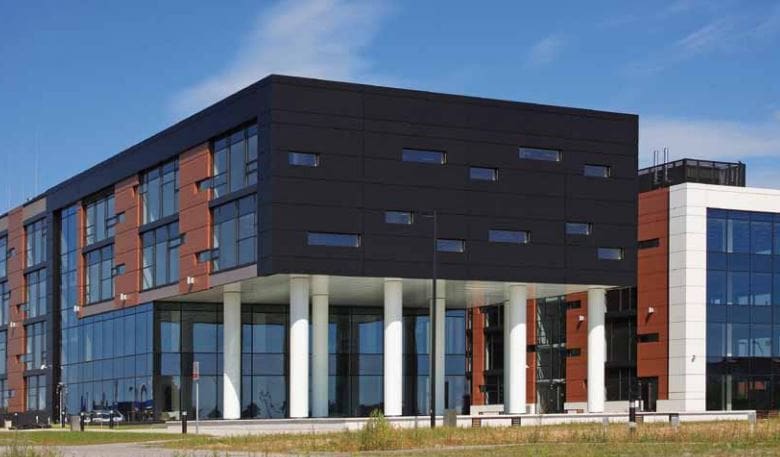
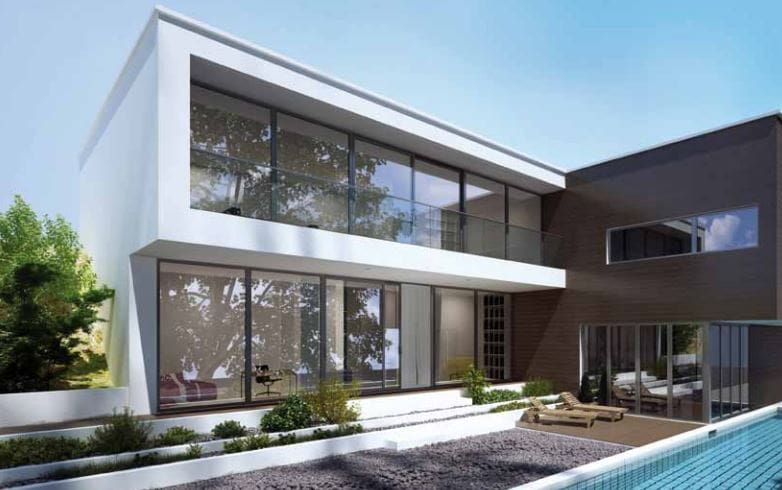
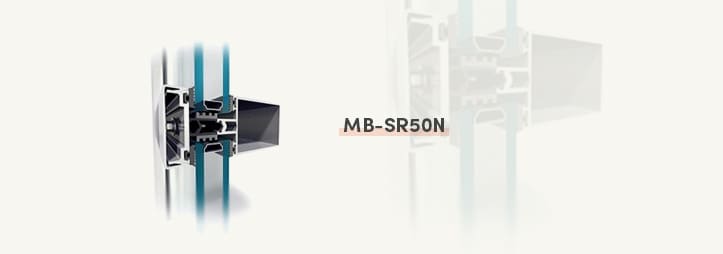
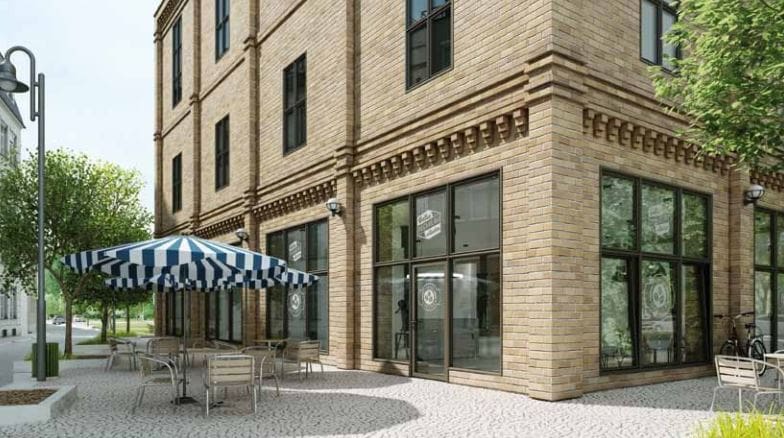
We live in times when the aesthetics and appearance of the building play an extremely important role. Currently, you cannot afford to make the exterior of your home, office or hotel unattractive. The use of facades is today the most popular and seems to be the only rational way to achieve an attractive appearance of a building. The facade system is an offer that meets the latest requirements of energy-efficient construction. Because we want our customers to be able to proudly present their buildings, we only use proven systems from ALUPROF MB-SR50N and MB-SR50N EFFEKT. MB-SR50N is a system of post-and-beam structures intended for the construction of curtain walls, spatial structures and roof glazing, the most important task of which is to illuminate the interior of the building and create an atmosphere for the users.
Advanced technical solutions allow for the construction of straight or arched walls, passing any external and internal angles and adapting to winter gardens. The system allows to apply solutions for the lintel-sill strip and for the curtain wall in a full configuration. The MB-SR50N system has two versions with increased thermal insulation MB-SR50N HI and MB-SR50N HI +, and it also has a variant that allows you to make a facade with different looks, the so-called MB-SR50N EFEKT semi-structural facade.
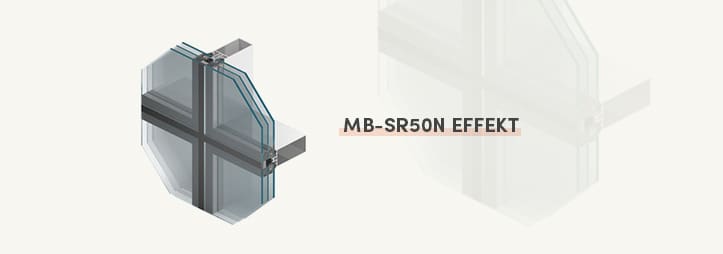
The shape of the profiles in the MB-SR50N system is the so-called sharp edge which affects the aesthetics of the structure. The shape of the profiles allows for the selection of mullions and transoms in such a way as to create the effect of flush surfaces on the internal side of the facade, which facilitates the aesthetic appearance with internal walls and suspended ceilings. The posts are available in various sizes, from 65mm to 325mm, and the bolts from 5mm to 189,5mm. This system gives a lot of freedom in the design of fixing points, and a wide range of glazing, so you can use triple glazed units. Various types of doors and windows can be built into the described system, including hinged and roof windows.
MB-SR50N EFEKT This system is based on the MB-SR50N aluminum system. A special system of fixing glass to mullions and transoms in MB-SR50N EFEKT facades gives the effect of a smooth glass wall from the outside, divided by a structure of vertical and horizontal lines, two centimeters wide. These gaps are filled with a special silicone binder, which ensures tightness of the structure and good insulation properties. An important advantage of this façade is its high glazing capacity: one and two-chamber panes and non-transparent panels can be used. What is important, packages with laminated glass can also be used in facades.
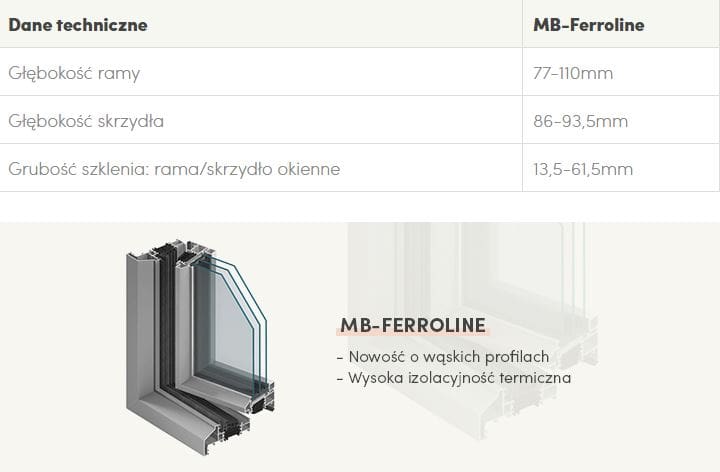
MB-Ferroline aluminum windows
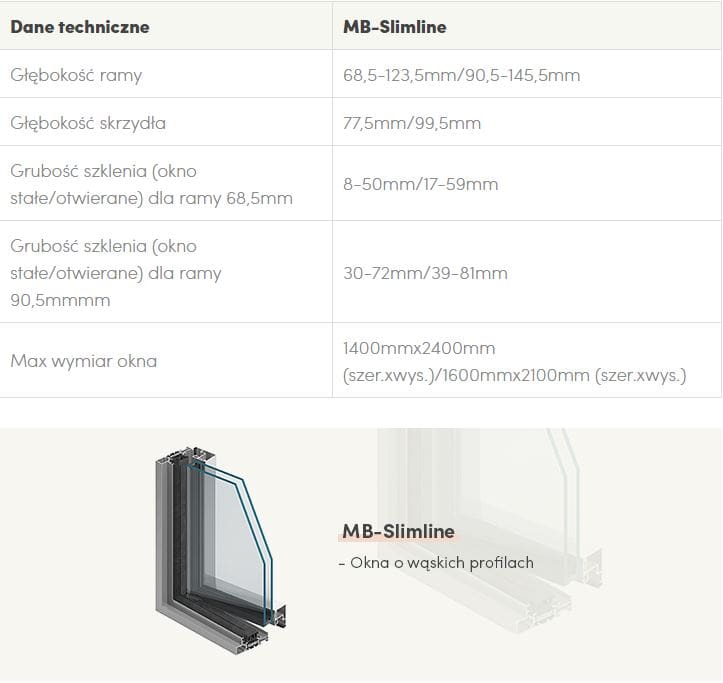
MB-Slimline aluminum windows
MB-23P aluminum windows
MB-23P is a system primarily intended for light balcony glazing. Sliding windows are horizontal. Such windows protect the open balcony space against bad weather conditions, i.e. wind, rain, snow, and even dirt and noise, and make it difficult for a thief to break in, which is especially important for customers living on the ground floor. The depth of the sections is 53mm for the frame, and 23mm for the wing.
The structures of the MB-23P system have an effective water drainage and ventilation system from the glass chamber and from the chamber between the leaf and the frame. The structure can be filled with glass with a maximum thickness of 8 mm, which is selected depending on the dimensions of the wings and the location of the building.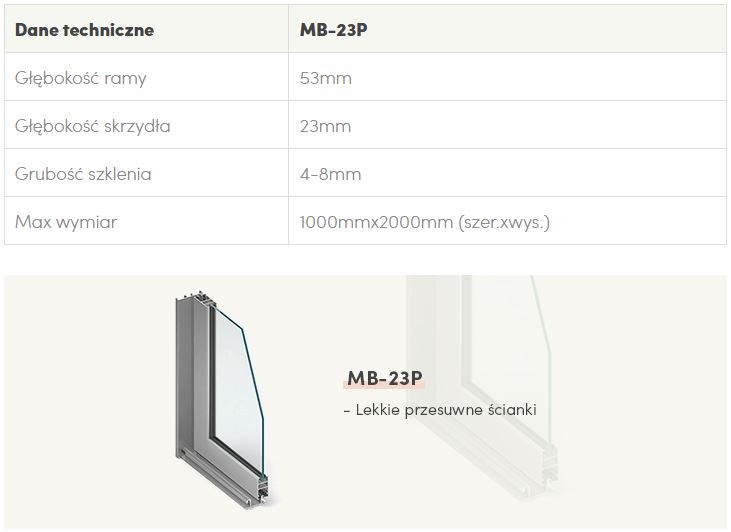
PVC windows
PVC IDEAL 4000 windows
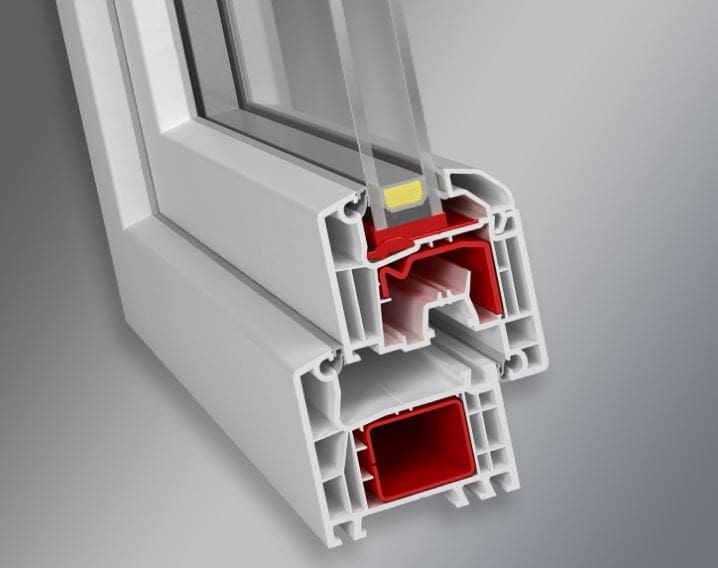
Classic, elegant lines in slender profiles with clear contours of the non-flush version are a guarantee of timeless elegance. For those looking for unique opportunities to create their windows, the Round-line series was created, distinguished by delicate optics and gentle curves. Various types of glazing beads allow for additional styling of the window and matching the character of the interior.
PVC IDEAL 5000 windows
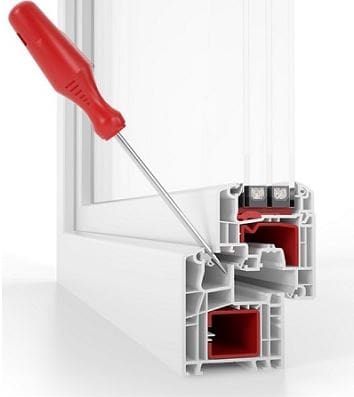
PVC IDEAL 7000 windows
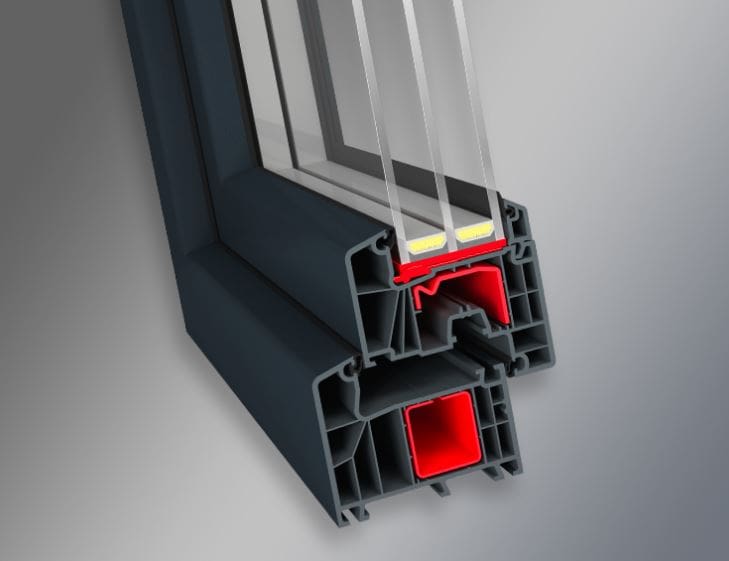
Modern architecture requires new standards in the technical, functional and aesthetic sphere. The changing legal requirements for construction joinery, as well as, above all, the expectations of customers looking for warmer and warmer windows are trends that cannot be left indifferent to.
IDEAL 7000 is an example of the synergistic use of the properties of profiles and insulating glass in order to create windows with very low thermal transmittance. The thermal transmittance coefficient of the profiles obtained in the tests Uf= 1,1-1,0 W / m2K combined with the possibility of using wider and warmer glazing units up to 51 mm wide guarantees the best thermal parameters of the window.
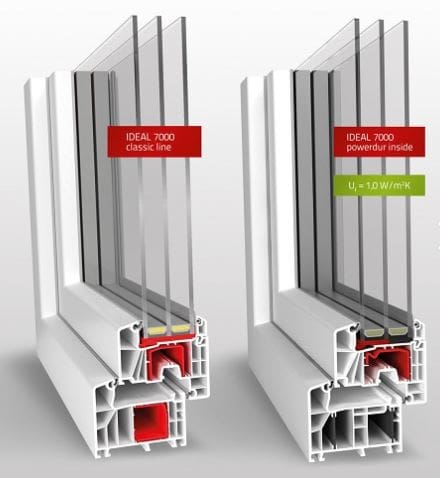
It is a system with an external seal, which makes it possible to offer an energy-saving solution also for glazed structures, without the need to use adapters. A large chamber with solid steel reinforcement guarantees the stability of the frame. The system enables easy connection of frames with other series of profiles with a depth of 85 mm. It is a system with an external seal, which makes it possible to offer an energy-saving solution also for glazed structures, without the need to use adapters.
PVC IDEAL 8000 windows
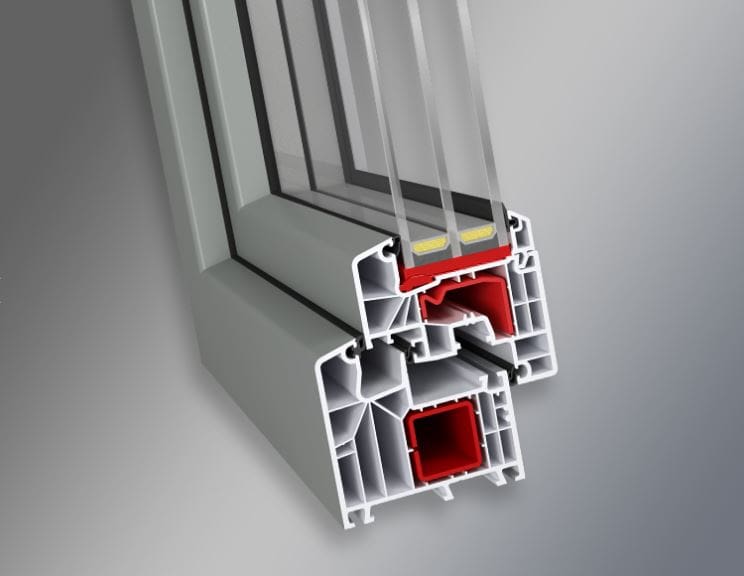
The IDEAL 8000 window system is a combination of the most modern technical solutions for obtaining above-average properties, guaranteeing warmth, silence, safety and exceptional window aesthetics. When choosing the IDEAL 8000 window system, you choose a top-shelf product in which the quality of the profiles and the materials used are not subject to compromise. A well-thought-out structure and profile geometry, combined with the available technologies, ensure excellent statics, long-term maintenance of the window function and trouble-free operation. Creating window structures with low thermal transmittance is not only a fashion and curiosity, it is a permanent and long-term direction of window technology development . The Ideal 8000 system fits perfectly in the search for thermal energy savings by increasing the depth of sections and the number of internal chambers and the implementation of new glazing technologies for window sashes.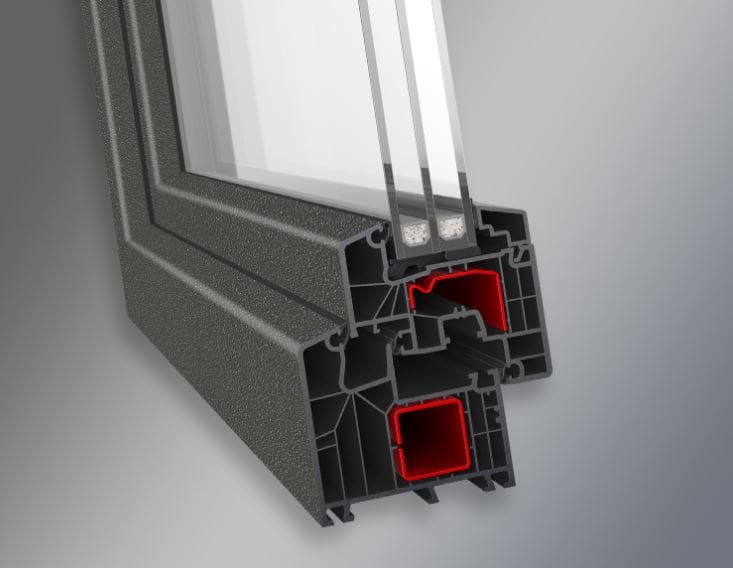
The thermal transmittance coefficient of U profiles obtained in the testsf= 1,0 W / m2K places the IDEAL 8000 system among the most important solutions for investors interested in energy-saving construction. Achieving such results was possible thanks to increasing the depth of the profiles to 85 mm, the six-chamber structure of the profiles and the designed system of three seals. The possibility of using energy-saving glazing with a width of up to 51 cm allows the creation of windows with a very low thermal transmittance. For example, a reference window with dimensions of 1230 x 1480 mm when using a glazing unit with a U-valueg= 0,5 W / m2K achieves a thermal insulation coefficient of Uw= 0,76 W / m2K, i.e. meeting the requirements for windows in the so-called passive construction. The IDEAL 8000 system is a classic structure with a central seal, which is a guarantee above-average properties in terms of tightness of the structure, thermal and acoustic insulation. IDEAL 8000 product flyer